
Johannesburg, South Africa — THISABILITY Newspaper and Disabled People South Africa (DPSA) hosted a Stakeholder Breakfast Meeting on 11 June 2026 at The Bannister Hotel in Johannesburg. The event marked World Assistive Technology Day as part of the regional Unlock the Everyday campaign.
Twenty-nine people attended. The room held occupational therapy experts, an assistive technology supplier, organisations of persons with disabilities, and four speakers who live with assistive devices every day. Two South African Sign Language practitioners worked throughout the event, making sure every part of the morning stayed accessible. THISABILITY Newspaper streamed the event live on Facebook, reaching people who could not attend in person.
The campaign behind the breakfast makes a clear point. In many low- and middle-income countries, only one in ten people who need assistive technology can get it. In high-income countries, that number rises to nine in ten. The devices already exist. The gap is about who can reach them.
Clinical insight meets hands-on demonstration
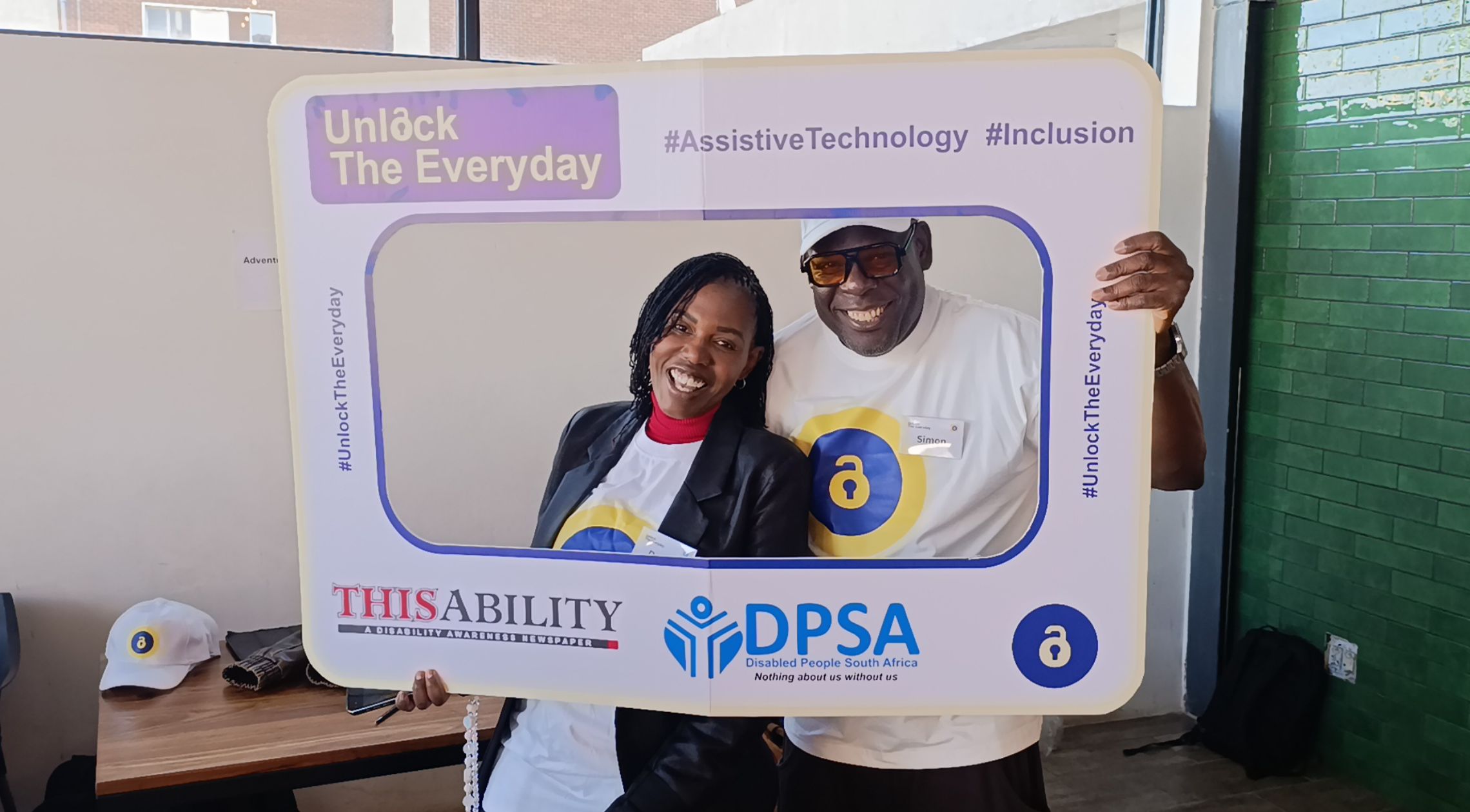
Kate Malope of DPSA and Simon Manda of THISABILITY Newspaper opened the morning. They framed assistive technology as a basic need for full participation in school, work and daily life, not a form of charity.
Ingrid Wormsbächer of the Occupational Therapy Association of South Africa (OTASA) followed with a presentation grounded in clinical practice. She explained how the right device, fitted properly and given at the right time, turns a diagnosis into real participation. A question-and-answer session gave attendees a chance to dig deeper into her points.
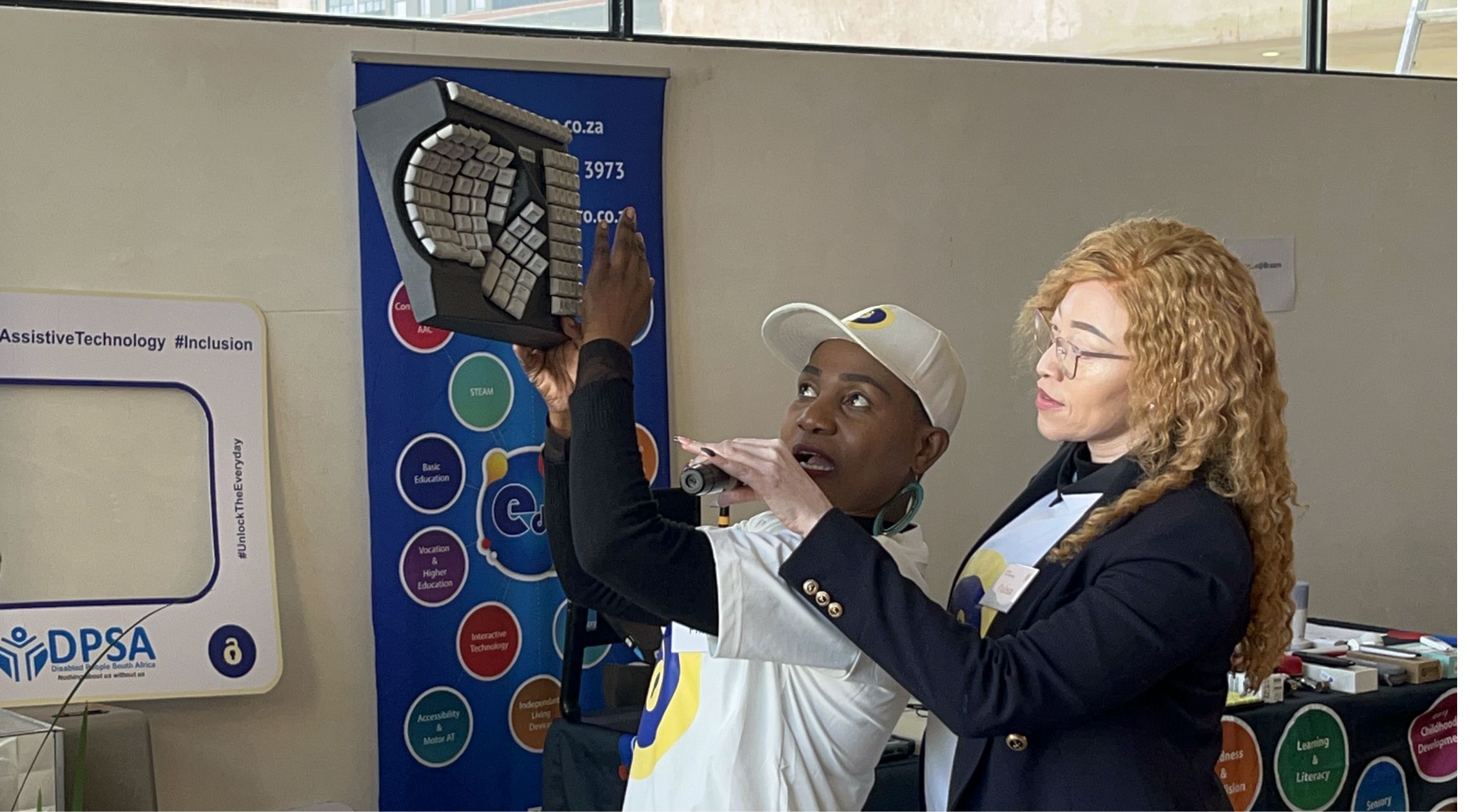
Siphathisiwe Makuvire of Edit Micro then led a 45-minute hands-on session. Attendees could see, touch and try out a range of assistive devices, including newer technologies. The session turned the morning’s advocacy message into something attendees could hold in their hands.
Four speakers, four journeys
The heart of the morning belonged to four speakers who shared their own experiences with assistive technology.
Hazel Naicker spoke about the range of tools she has used over the years. Her story showed that assistive technology rarely stays still. It changes and grows alongside a person’s needs.
Thabiso Molopo described his bionic, programmable prosthetics, worth more than R2 million. He explained how he obtained them at no personal cost. His story made the campaign’s main point clear: the technology exists, and the real challenge lies in securing access to it.
Palesa Mosiea, who lives with albinism and a related sight condition, spoke about gaining telescopic glasses. The right pair of glasses gave her enough independence to drive her own car.
Abongile Xhantini, who also lives with albinism and sight challenges, described her guide dog as her superhero. Beyond guiding her, the dog has learned to help with conditions that are not visible to others, including knowing when to prompt her to take a break.
What the morning revealed
A few clear themes ran through every session.
- The technology already exists. The challenge is getting the right device to the right person at the right time.
- Funding pathways for high-value devices do exist, as Thabiso’s prosthetics showed.
- The right device restores independence and dignity, from driving a car to navigating daily life with confidence.
- Assistive technology covers more ground than most people expect, including prosthetics, low-vision aids, everyday tools and trained service animals.
Reach beyond the room
The Facebook livestream drew 691 views from 413 viewers, with four new follows for THISABILITY Newspaper’s page. Viewers watched for almost three hours in total. Most people found the stream through their Facebook feed or through groups, and the audience skewed towards adults aged 45 to 54.
THISABILITY Newspaper and DPSA said they plan to keep building on this work. Both organisations remain committed to continued coverage of assistive technology access and ongoing collaboration with SAFOD on the Unlock the Everyday campaign.
Follow the campaign on social media using #UnlockTheEveryday, #WorldATDay and #MeAndMyAT.