
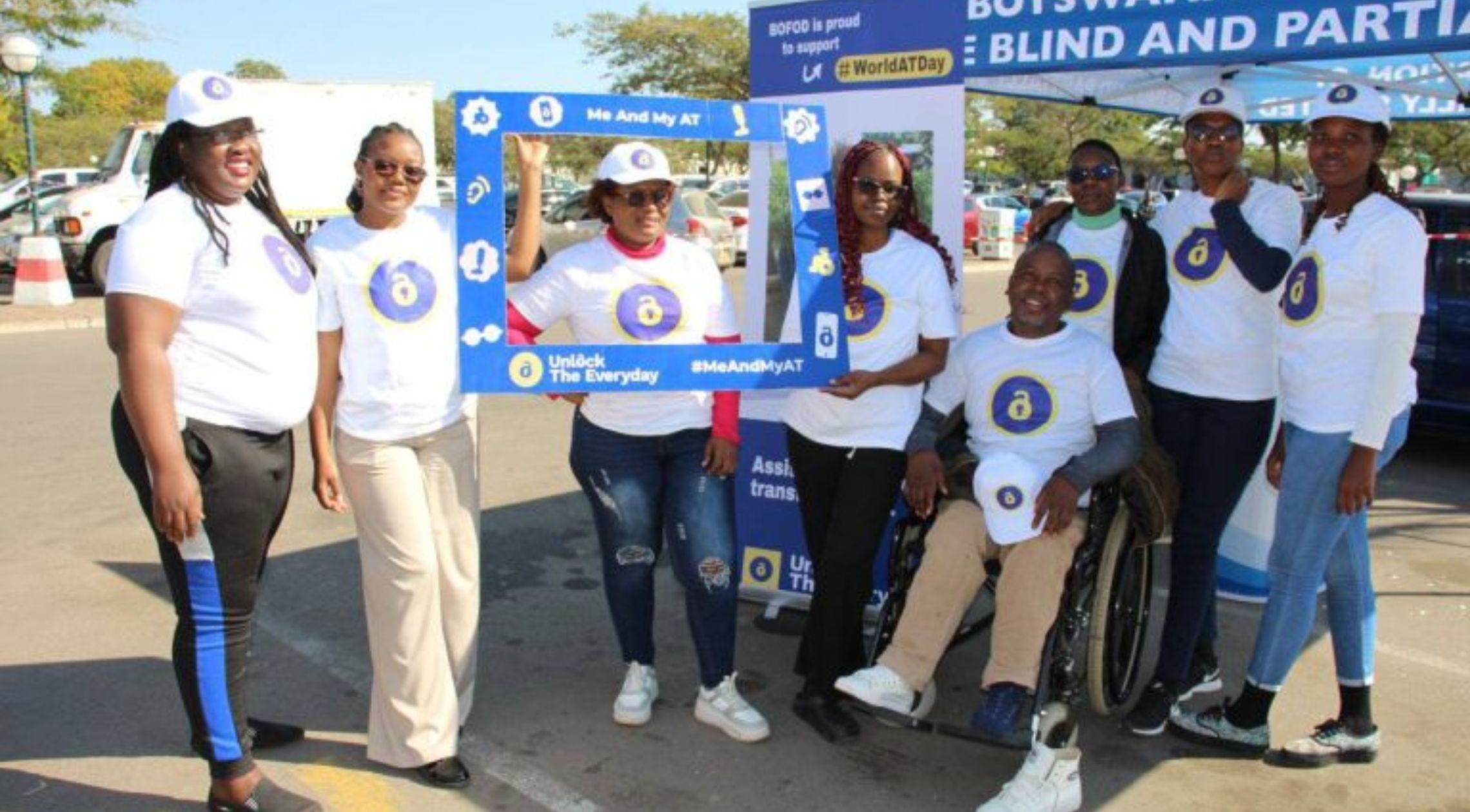
Gaborone, Botswana — To mark World Assistive Technology Day on 4 June 2025, the Botswana Federation of the Disabled (BOFOD) held an Assistive Technology Pop-Up event in Gaborone. The event brought together assistive technology suppliers, manufacturers, healthcare professionals, people with disabilities and members of the public. It offered live demonstrations, expert discussions and hands-on sessions covering a wide range of assistive devices.
The event drew strong attendance, including decision-makers and community champions. Most participants rated it as highly relevant to their needs. The pop-up helped attendees understand what assistive technologies are available and how they can help in daily life. It also built new connections between users and the people and organisations that supply and support their devices.
The event formed part of a wider three-month initiative supported by SAFOD under the Unlock the Everyday campaign. The campaign runs across eight Southern African countries and aims to raise awareness of assistive technology and the right to access it.
A campaign built on real stories
Before and around the pop-up, BOFOD ran a media campaign focused on the lived experiences of assistive technology users. The campaign shared personal stories through social media, articles and video content. Local media also picked up several of the stories, widening the reach beyond BOFOD’s own channels.
The campaign showed the challenges AT users face every day, while also showing how the right tools change lives for the better. It sparked new conversations within the community and encouraged others to share their own experiences.
One of those stories stood out. Okatswa is a mother who lost her sight during her youth. She raises two boys, Ronald and Arnold, and navigates daily life with confidence. She prepares breakfast using her sense of smell and turns household routines into games and lessons for her children. She takes her boys to the park using her white cane, and she teaches them to believe in what they can do. Her story showed what independence looks like when a person has the right tools and the right attitude.
Wellness Day takes the conversation further
On 26 June 2025, BOFOD held a Wellness Day at Extension 12 Park in Gaborone. The event was designed to open dialogue between the people who use assistive technology, the people who make and supply it, and the officials and organisations responsible for making it accessible.
Local health officials and disability advocacy representatives attended alongside community leaders, healthcare workers, technology providers and non-profit organisations. The day included interactive demonstrations, workshops and personal testimonies from AT users.
Key topics included funding gaps, training needs for technology users, and what policy changes would make assistive devices more accessible. Participants came away with stronger connections, new information about available devices, and a shared commitment to pushing for better access in their communities.
What worked, and what came next
BOFOD used three main channels to promote and report on both events. Radio Botswana broadcast coverage of the activities and helped reach audiences beyond Gaborone. Facebook served as the main platform for live coverage, event updates and user stories. WhatsApp allowed direct communication with community members and helped spread event reminders quickly.
Across the full campaign period, BOFOD reached around 100 people through awareness-raising activities. Participants reported a clear increase in their understanding of assistive technology and many said they planned to share what they had learned with people in their own networks.
BOFOD also reflected honestly on what could improve in future. Engagement tended to drop off after events, pointing to a need for stronger follow-up. The WhatsApp reach was limited to existing contacts, and feedback collection was not as structured as it needed to be.
Looking ahead, BOFOD plans to build a more robust follow-up strategy, reach out to new partner organisations, create regular social media content to maintain community interest, and work with policymakers to advocate for better AT funding and access.
Follow the campaign on social media using #UnlockTheEveryday, #WorldATDay and #MeAndMyAT.