
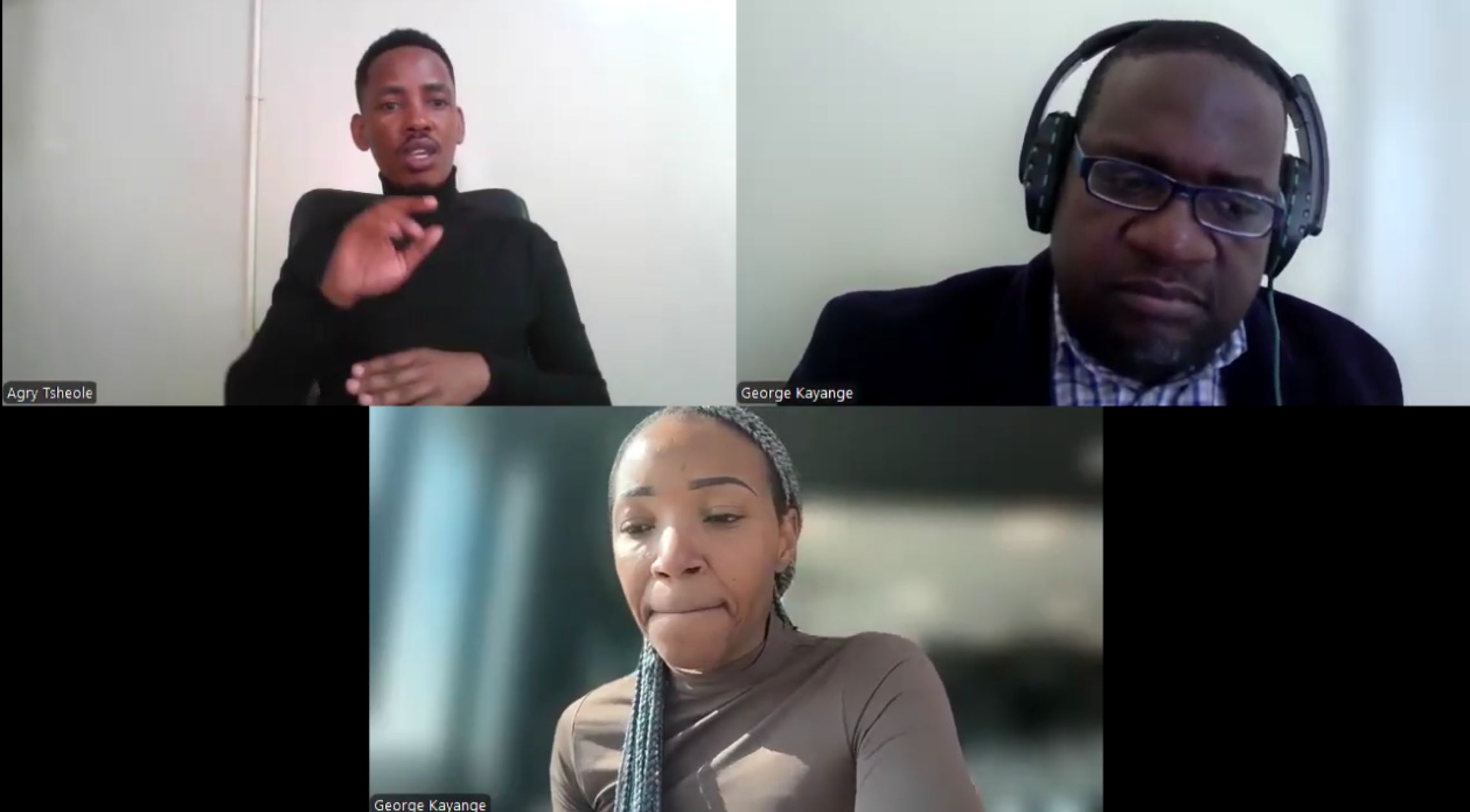
Virtual — Southern Africa — On 28 July 2026, the Southern Africa Federation of the Disabled (SAFOD) held its Regional Inclusive Assistive Technology Webinar. Organised under the Unlock the Everyday campaign and themed “Innovate, Include, Impact – Assistive Technology for Resilient Communities,” the two-hour online event brought together organisations of persons with disabilities (OPDs), AT users, government representatives, researchers, manufacturers, climate actors and development partners from across the region.
The webinar was moderated by Banthati Tshekoetsile and included sign language interpretation throughout. Participants could engage through live chat, a Q&A tool, verbal contributions and audience polls, making the event accessible to a wide range of attendees.
Webinar Focus
The event built on the 2025 SAFOD webinar series and moved the conversation from general awareness into sharper focus on four areas: the state of the AT ecosystem in Southern Africa, education and young people, local manufacturing, and the intersection of climate change and AT access. A lived experience panel then placed AT users at the centre.
Setting the scene: the AT ecosystem in Southern Africa
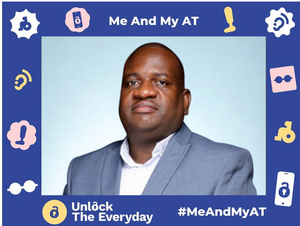
Dr George Mwika Kayange, a Development Researcher and AT Specialist with over 20 years of experience, opened the webinar with a scene-setting presentation. He described the current state of assistive technology provision across the region, covering SAFOD’s mandate and reach across the 16 member states of the Southern African Development Community (SADC), the key gaps in access, affordability and availability, the role of universities and innovation hubs in local AT development, and the policy and financing systems that shape what people can and cannot access.
Dr Kayange used his own research experience to ground the discussion. He described visiting a workshop in Malawi where a donated wheelchair had sat unused for four years because it was only suited to hospital floors, not the rough terrain where most beneficiaries live. He also recounted finding wooden crutches donated from Ireland sitting in the same workshop, despite Malawi having abundant timber. His point was direct. Malawi, and many countries like it, still depend on donations for things that local materials and skills could produce. He asked participants whether this is a policy problem or a mindset problem, framing it as food for thought for the rest of the webinar.
Dr Kayange also founded the AT Innovation Wiki (atinnovation.wiki), a digital knowledge platform covering over 115 AT terms, case studies and resources from 11 countries across Southern and East Africa. He has previously served as Director of Programmes at SAFOD and as Technical Advisor on Assistive Technology at ATscale, hosted at UNOPS in Geneva.
Education and opportunities for young people
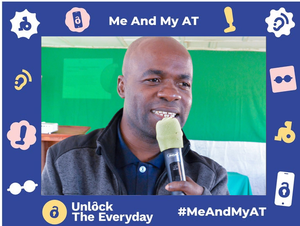
Dr Pick Nkomwa, Disability Rights Activist, Social Entrepreneur and founder of the Nkomwa Foundation Trust in Zimbabwe, presented on how assistive technology supports inclusive education and expands opportunities for young people with disabilities in under-resourced and rural settings.
Dr Nkomwa’s organisation has delivered wheelchair ramps at public buildings, distributed customised assistive devices to elderly and young people in remote villages, and built the Nkomwa Nkemeleje Disability Centre in Gwanda South in partnership with the Gwanda Rural District Council and the Australian Embassy.
His foundation has also run a 2.5-year community outreach programme reaching over 1,000 persons with disabilities. His presentation drew on this grassroots experience to show what education and opportunity look like when the right tools and the right support are in place.
Local manufacturing: wearing independence
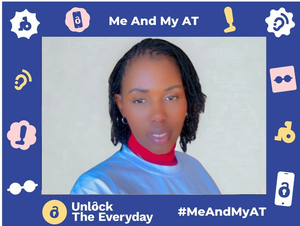
Ms Delma Tshabalala, Fashion Designer and Adaptive Wear Innovator, presented on local manufacturing and prototyping, making the case that adaptive clothing is wearable assistive technology. She spoke from her own experience. Personal health challenges that made daily dressing difficult led her to found WEARAPY, a brand that designs stylish, functional and inclusive clothing for people living with physical disabilities, autism, dementia, Alzheimer’s disease, stroke recovery and other conditions.
Her designs use magnetic fastenings, Velcro closures, adjustable fittings, easy-access openings and sensory-friendly fabrics. These features promote greater independence for the wearer and reduce the physical demands placed on caregivers.
Tshabalala’s work offered a practical model of what locally relevant AT innovation looks like in practice. It requires no specialist machinery or large capital outlay. It starts with listening to users, understanding their bodies and daily needs, and designing from there outward.
Climate change, disasters and AT resilience
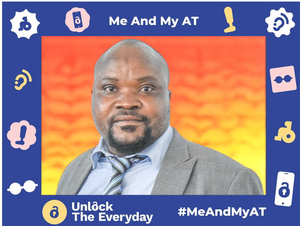
Mr George Chiusiwa, Disability Rights Advocate and Inclusive Development Specialist, addressed one of the most urgent and often overlooked dimensions of AT access. Climate-related disasters, health emergencies and economic shocks do not affect everyone equally. For persons with disabilities who depend on assistive devices, a flood, a cyclone or a prolonged power cut can mean losing a mobility aid, a hearing device or access to a power-dependent communication tool, often without any system in place to replace it.
Chiusiwa brought a legal and policy perspective to this challenge. He holds a Master of Laws in International and Comparative Disability Law from the University of Galway and served as Director General of the Malawi Council for Disability Affairs (MACODA) from 2023 to 2026. He played a key role in the development of Malawi’s Persons with Disabilities Act (2024), the Mental Health Act (2025), the National Disability Policy (2025), and the revised National Action Plan on Persons with Albinism (2026–2030). He currently serves as a consultant for Disabled Women in Africa (DIWA). His presentation showed how climate vulnerability and AT access intersect, and what legal and policy tools can protect AT continuity when disasters strike.
Q&A and open discussion
A question-and-answer session followed the thematic presentations. Participants submitted written questions and comments through the webinar’s chat and Q&A tools, with the MC facilitating responses from speakers. Discussion touched on local production, the role of donors, procurement barriers and the importance of cross-country learning.
One participant, Ms Kaseketi, made a suggestion that SAFOD explore linking the webinar content to a planned Digital Disability Summit in Zambia, so that the AT innovations and discussions could reach a wider in-person audience. Dr Kayange confirmed SAFOD is already in contact with the Zambia team and would pursue this further.
Lived experience panel: voices of AT users
Dr Kayange introduced the webinar’s second session, the lived experience panel, by explaining its purpose directly. Policy, innovation and procurement discussions about assistive technology are only meaningful when they include the people the technology is meant to serve. He said the panel reflects a core principle of the Unlock the Everyday campaign: the voices and lived realities of AT users must sit at the heart of any conversation about AT.
Luthando Kekana — a wheelchair user’s journey
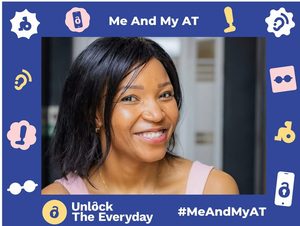
Ms Luthando Kekana, an award-winning Disability Inclusion Advocate and founder of Umba Creative Services in South Africa, opened the panel. She is a paraplegic and a manual wheelchair user. She is also Chairperson of the Association for the Physically Disabled Greater Johannesburg and a Trustee of the South African Disability Development Trust.
She spoke with clarity about how access to a good wheelchair shaped her life. She currently uses a Juke wheelchair imported from Italy, not out of preference for foreign products, but because it is lightweight, strong and fully customised to her height and weight. She said she had tried locally manufactured wheelchairs before, and one broke at night while she was out, leaving her vulnerable. The local product had failed not because local manufacturing is inherently poor, but because the investment needed to build a reliable, customised device has not yet arrived in the local market.
She described the financial gap between a basic hospital wheelchair costing around R8,000 and a daily living wheelchair costing R100,000 or more, and said most people including medical aid administrators do not understand the difference. A hospital wheelchair is designed to move a patient down a corridor. A daily living wheelchair is designed to carry a person through their full life.
Kekana also spoke about the broader dimension of access. Her wheelchair, she said, has allowed her to be a competent entrepreneur, to play aggressively in corporate spaces, to travel and to live fully. She described this as the soft part of AT that rarely gets discussed: the social element, the dignity, the integration into society.
Her message to every person in the room was direct. Whatever space you are in, whatever influence you hold, never stop talking about disability. If universal access is not on the agenda, put it on the agenda. She said the shift she is pushing for in South Africa is the same shift needed everywhere: AT must be treated not as charity, but as a basic human right, pursued with the same intention and force as any other right.
Mandla Blessing Methula — navigating the world with visual impairment
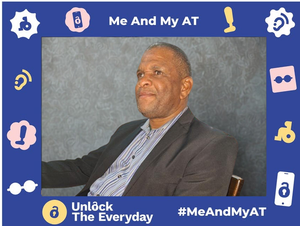
Mr Mandla Blessing Methula, Founder and Director of the Eswatini Comprehensive Disability Mainstreaming Initiative (ECDMI), spoke as a person with visual impairment. He was born with 2% vision and lost his remaining sight in 2007. He said this did not stop him. His work spans white cane safety, accessible infrastructure, early childhood eye health, and collaboration with international organisations including Visual Eyes Afrika-Int (VEA-int) to address gaps in vision rehabilitation and eye screening across Southern Africa.
Methula described the navigation and accessibility tools he relies on in daily life and spoke about the barriers persons with visual impairment face in accessing technology that is not designed with them in mind. His presence on the panel was itself a statement, offered as a reminder that access to assistive technology is not a technical question but a human one.
Makatleho Molotsi — albinism, sunscreen and the law
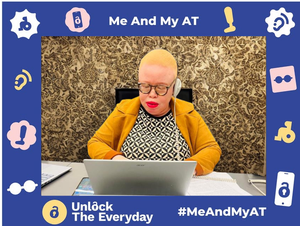
Ms Makatleho Molotsi (also known as Masekara Sekoankoetla), Chief Legal Officer in the Human Rights Unit of Lesotho’s Ministry of Law and Justice, brought a perspective that is both professional and deeply personal. She has albinism and is the mother of two daughters with albinism. She previously served as Advocacy and Human Rights Officer at LNFOD, where she championed the inclusion of persons with disabilities.
She spoke about the specific AT needs that persons with albinism face, including skin protection products such as sunscreen lotion, vision aids and other tools that address the health and inclusion challenges that come with the condition. Her dual identity as a lawyer and a person directly affected by the issues she advocates on gave her contribution particular weight.
Cross-learning and what comes next
The webinar closed with official closing remarks and brief updates from Ms. Ashllah Mmusi, SAFOd Director of Programmes, on upcoming Unlock the Everyday campaign activities.
Across all sessions, one theme ran clearly through the webinar. Southern Africa has laws, frameworks and growing innovation. What it still needs is the investment, the local manufacturing capacity, the climate-resilient systems, and the political will to put the right device in the right person’s hands at the right time.
The webinar is part of a series. Future sessions will feature the lived experiences of additional disability groups not represented on 28 July.
Follow the campaign on social media using #UnlockTheEveryday, #WorldATDay and #MeAndMyAT. Visit the official AT Webinar website at https://atwebinar.org/ for downloadable speaker resources (presentations) and future event information.