
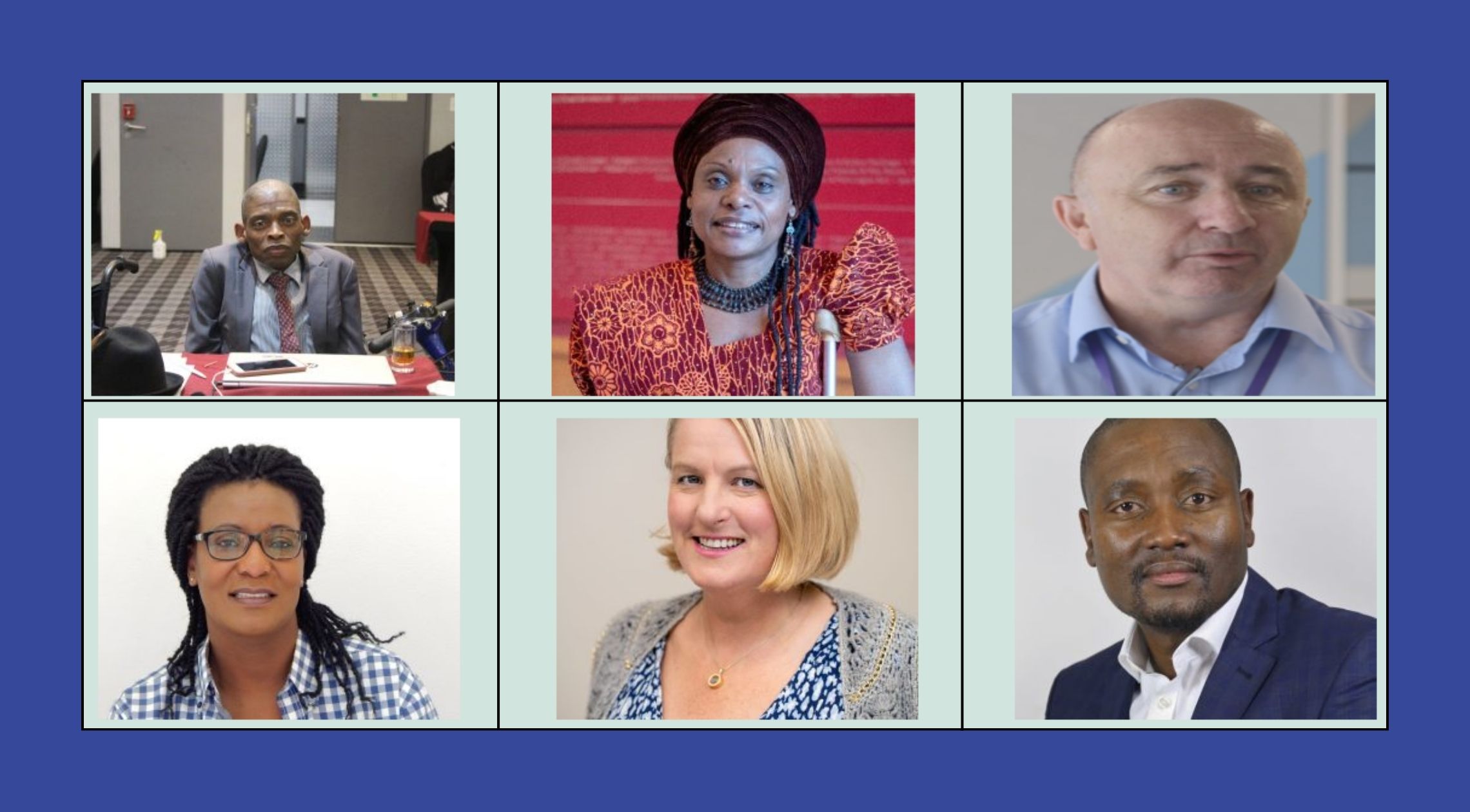
On 26 June 2025, the Southern Africa Federation of the Disabled (SAFOD) held a webinar titled “Multi-Sector Dialogue on Bridging Innovation, Investment and Inclusion Gap to Increase Access to Assistive Technology for Persons with Disabilities.” The webinar brought together government officials, manufacturers, donors, researchers and disability groups from across the region.
The event formed part of a three-month project funded by UNOPS. SAFOD ran the project with ten partner organisations of persons with disabilities across eight African countries. The webinar stood as one of the project’s key activities.
A welcome built on urgency
Mr Wabotlhe Chimidza, Chairperson of SAFOD, opened the webinar. He told participants that assistive technology means far more than equipment alone, saying it’s about dignity, independence, and the realization of rights.
Chimidza pointed to real legal commitments already in place, including the UN Convention on the Rights of Persons with Disabilities. He noted that the Convention calls on states to promote assistive technology and protect access to mobility aids, yet implementation remains patchy. He closed his welcome with a call for change, asking participants to help build a future where access to Assistive Technology is not a privilege, but a right fulfilled.
What the data shows
Dr Christine Peta, a disability policy and international development expert from Zimbabwe, gave the keynote address. She grounded the discussion in numbers from the World Health Organization and ATscale. In low-income countries, only 10% of people who need assistive technology can get it. In high-income countries, that figure rises to 90%.
Dr Peta warned that the number of people needing assistive technology is set to grow sharply, reaching an estimated 3.5 billion people by 2050. She described how many persons with disabilities currently rely on donated devices, often of poor quality and unsuited to their needs.
She also made a clear link between inclusion and access, telling the audience: We cannot talk about inclusion when people are unable to access AT. Dr Peta pointed to innovation hubs, local industry and university design teams as practical ways to build more assistive devices closer to home, rather than relying so heavily on imports.
Lessons from eight years of partnership
Dr George Torrens, a Senior Lecturer at Loughborough University, shared lessons from eight years of work with SAFOD and the Kgatleng Disabled People’s Association in Botswana. His team’s research aimed to highlight the needs of disabled craftspeople in developing a sustainable social enterprise around inclusive crafts.
The work led to real outcomes on the ground. These included training for SAFOD staff, a new website to support local artisans, and the construction of the Centre for Culture, Heritage, Innovation and Enterprise. Dr Torrens stressed that the right device alone is not enough. He said disabled craftspeople also need access to wider markets, business investment and ongoing support that builds skills over time.
Why donors and partners matter
Ms Ceridwen Johnson, Communications and Advocacy Specialist at ATscale, spoke about the role donors and partners play in widening access to assistive technology. She described how ATscale works to coordinate funding and strategy across countries, rather than letting efforts run in separate silos.
Johnson gave examples of this work in practice, including a three-year programme in Cambodia that trains teachers to screen children’s eyesight and brings vision centres closer to communities. She said the partnership model matters because closing the access gap takes shared effort across government, donors and local communities. She closed with a clear message for investors: An investment in assistive technology is an investment in our future.
Putting persons with disabilities at the centre
Mr Shatu Nhlapo, Executive Director of the Lesotho National Federation of Organizations of the Disabled, spoke on meaningful participation in decision-making. He returned to the disability rights movement’s founding principle, “Nothing About Us, Without Us,” and argued that this must guide every stage of assistive technology design, procurement and rollout.
Nhlapo explained that real participation goes beyond a single survey or consultation. It means including persons with disabilities from the earliest design stage through to evaluation, with particular attention to women, young people and those living in rural areas. He shared lessons from LNFOD’s own advocacy work in Lesotho, noting that persistence and strong partnerships have been key to securing government engagement.
A clear call to action
Ms Musola Kaseketi, Deputy Chairperson of SAFOD, closed the webinar. She thanked all the partners, experts and advocates who took part, and summed up the day’s central message. She called on every sector represented, from government to the private sector, to treat their role as essential, not optional, in closing the gaps discussed.
She left participants with a direct challenge: Together, we can bridge the gaps in innovation, investment, and inclusion and ensure assistive technology reaches everyone who needs it.
Building on the conversation
The webinar set out three clear goals. It aimed to build a stronger shared understanding of assistive technology among everyone who took part. It aimed to build lasting networks for collaboration across sectors. It also aimed to produce real recommendations for national policy and procurement systems.
Together, the speakers made one point clear. The tools needed to support persons with disabilities already exist. The task now is building the investment, research, partnership and inclusive decision-making needed to put them within reach.
You can download all speeches and presentations from the webinar on the official AT Webinar website: https://atwebinar.org/
Follow the campaign on social media using #UnlockTheEveryday, #WorldATDay and #MeAndMyAT.