
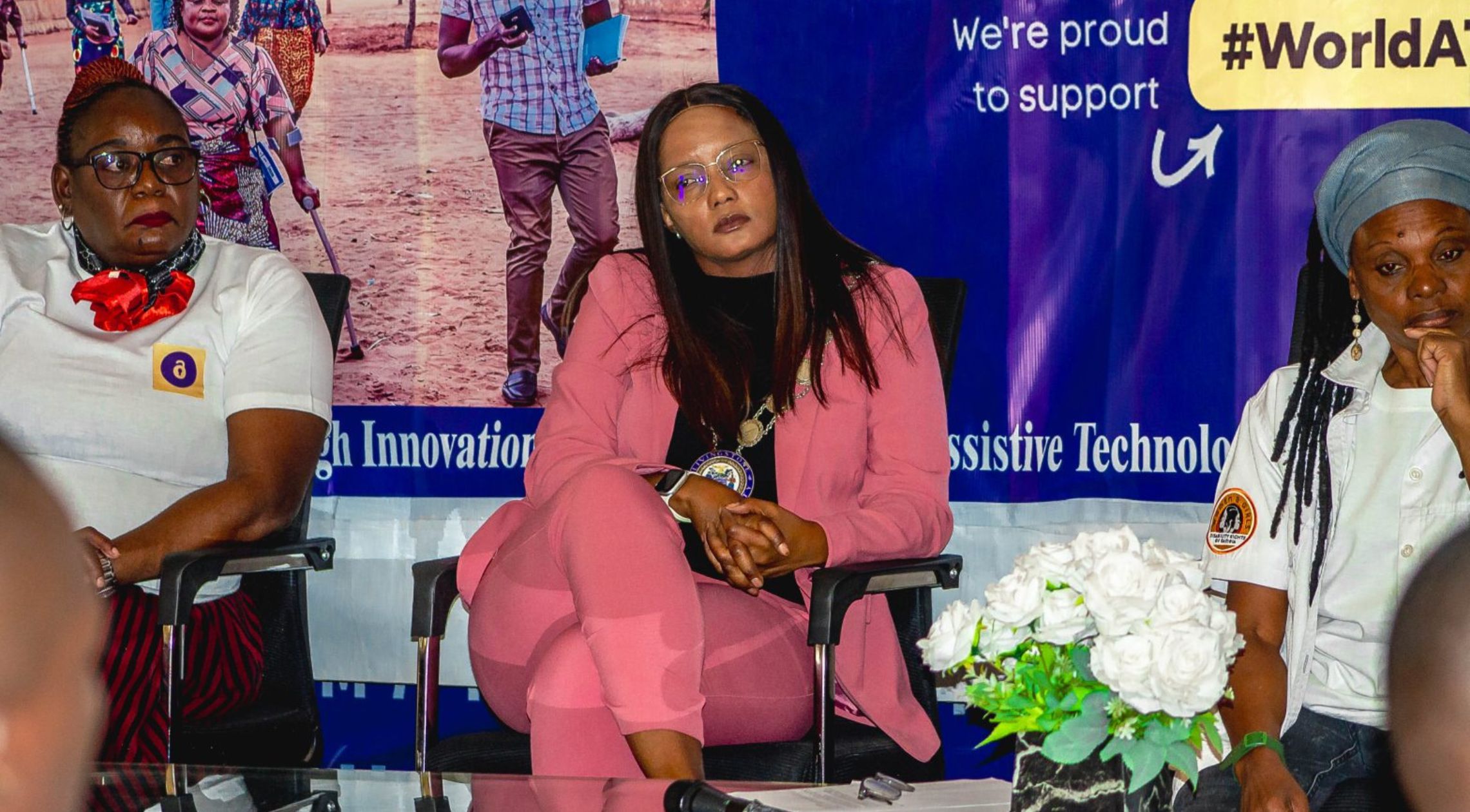
Livingstone, Zambia — On 4 June 2025, Vilole Images Productions (VIP-WoGDRoZ) held a commemoration event for World Assistive Technology Day in Livingstone. The event brought together 47 people drawn from organisations of persons with disabilities, community-based organisations, government, religious groups, civil society, arts organisations, human rights advocates and media houses.
The Mayor of the City of Livingstone, Ms Constance Nalishebo Muleabai, graced the occasion. Her presence gave the event real public weight and set the tone for a day that moved beyond commemoration into concrete action.
The event formed part of the wider Unlock the Everyday campaign, led by SAFOD across eight Southern African countries. VIP-WoGDRoZ implemented the activities in partnership with ZAFOD and with support from SAFOD and ATscale.
Voices on screen
The centrepiece of the day was a documentary produced by VIP-WoGDRoZ, profiling three people who use assistive technology in their daily lives. The team travelled between Lusaka and Livingstone to shoot the interviews.
The three people featured were Dr Thomas Mutonga, who has a visual impairment and works as a Disability Officer with UNICEF Zambia, having previously lectured at the University of Zambia. Racheal Muuma Chomba, who has a hearing impairment, is a lecturer at the University of Zambia. Blessings Mulumbu, who has cerebral palsy, recently graduated from the University of Zambia’s Mongu Extension campus.
The documentary was still in post-production on the day of the event. A 15-minute offline edit was screened instead, giving participants enough to spark a lively panel discussion. The completed film remains a lasting resource for advocacy work beyond the event itself.
A discussion forum with real teeth
Following the screening, a panel discussion gave institutions and individuals the chance to speak about assistive technology from their own vantage points.
Mr Muchindu from the Livingstone Institute of Business and Engineering Studies (LIBES) addressed how the institute can help local entrepreneurs develop affordable assistive devices and what role it could play in building partnerships between government, business and disability organisations.
Victoria, a partially sighted student representing learners from David Livingstone Education College (DALICE), spoke about the experiences students face when trying to access and use assistive technology during their studies, and what changes would help the education system do better.
Clayton Hazemba from Livingstone University Teaching Hospital (LUTH) discussed how the hospital integrates assistive technology into rehabilitation and healthcare, and what partnerships exist to improve access for patients and healthcare providers.
Mr Mwila, a teacher at Holy Cross Basic School who has a hearing disability, spoke about how assistive technology affects teaching methods and the support teachers with hearing disabilities need to do their jobs well.
After the panel, the floor opened to the audience. The engagement was, by all accounts, lively and substantive. Participants raised concerns about the gaps in access to assistive devices and the high costs that block many people from getting what they need. Issues around mental health disability, autism and children with disabilities in schools came up, as did the specific challenges faced by women with disabilities and how lack of access to assistive technology holds back their progress in society.
One story, one pledge, one artificial leg
The most powerful moment of the day did not come from the panel. It came from a 21-year-old schoolgirl named Chikomo Mukoswe.
Chikomo, a Grade 9 pupil, shared the story of how she acquired her disability in 2017 following a road traffic accident. VIP-WoGDRoZ had been supporting her with crutches since 2022, but the organisation had not been able to fund an artificial leg for her. She told her story to the room.
Her account moved the Mayor to call for pledges on the spot. By the end of the event, K12,000 had been raised to fund Livingstone University Teaching Hospital to begin making Chikomo’s artificial limb. The Mayor made the highest pledge. Ms Kaseketi followed. All pledges were to be honoured by 31 July 2025.
It was a direct, immediate outcome of putting assistive technology in the public eye with real people and real stories at the centre.
Media reach and a new taskforce
Ahead of and around the event, television interviews were scheduled on Hope Channel TV in Lusaka for 22 and 29 May and 4 June. John Njovu appeared on behalf of ZAFOD and spoke about the World Day of Assistive Technology. The campaign also reached audiences through ZNBC TV, Prime TV, the Times of Zambia, the Daily Mail, and Zambezi FM radio, with an estimated total reach of around 3,000 people.
The discussion forum also produced a structural outcome. ZAPD and VIP-WoGDRoZ were assigned to lead the formation of a district taskforce on assistive technology in Livingstone. Tusole Youth and Friendly Foundation pledged transport support for 20 people to attend taskforce meetings, and VIP-WoGDRoZ offered its boardroom as a meeting space.
What the day taught
VIP-WoGDRoZ reflected honestly on what worked and what did not. The launch and forum discussion worked well, with strong attendance and full participation from those present. The documentary could not be completed in time due to production delays, and some television interview slots went unfilled when expected guests did not attend.
Looking ahead, VIP-WoGDRoZ said it would start documentary production earlier, assign dedicated media staff for AT content, and avoid committing to too many activities within a short project period.
The day in Livingstone showed what World Assistive Technology Day can be when it moves from ceremony into conversation, and from conversation into action.
Follow the campaign on social media using #UnlockTheEveryday, #WorldATDay and #MeAndMyAT.