
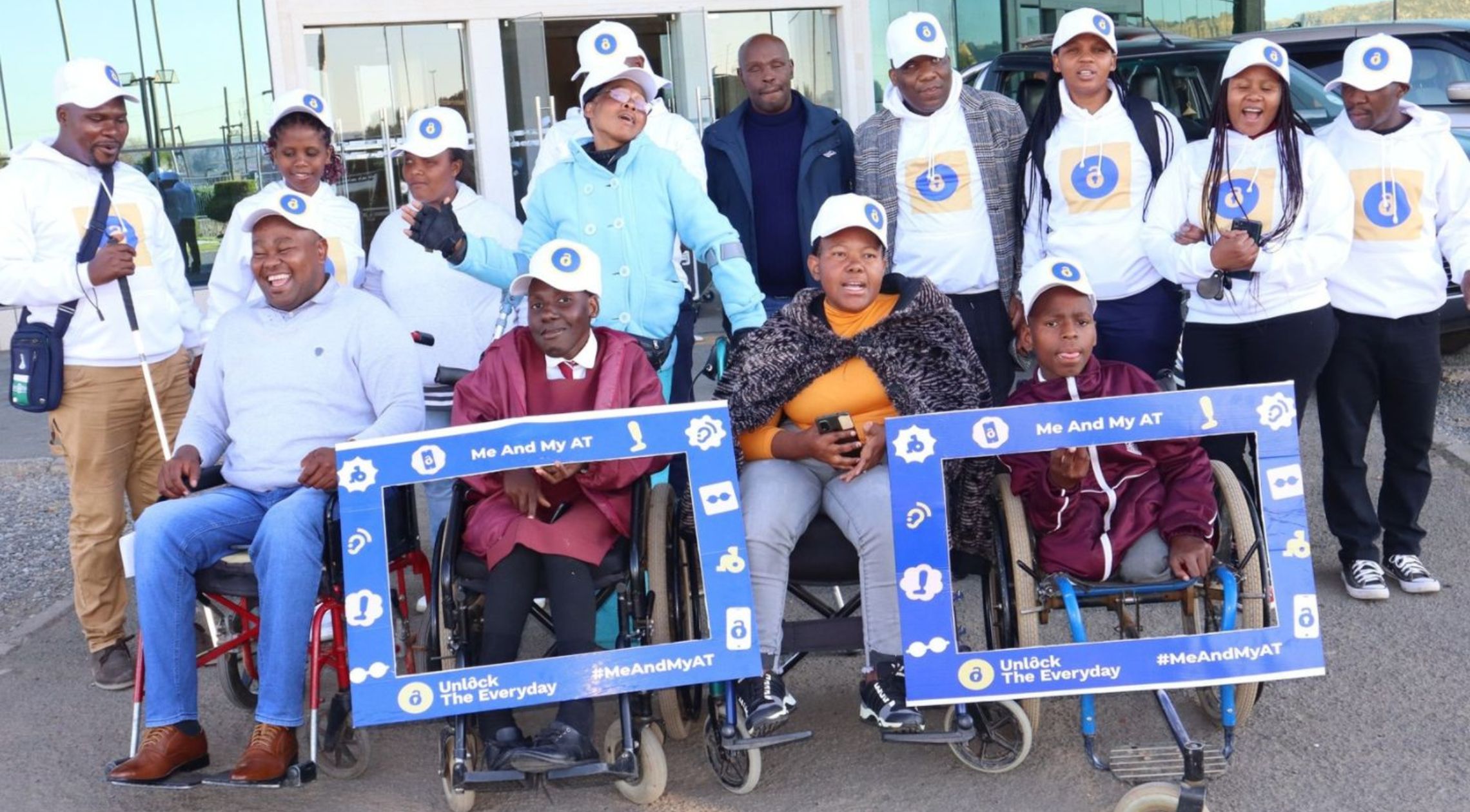
Maseru, Lesotho — The Lesotho National League of the Visually Impaired Persons (LNLVIP) marked World Assistive Technology Day on 4 June 2025 with a set of activities designed to take the assistive technology message beyond disability organisations and into public life. Working in partnership with SAFOD under the Unlock the Everyday campaign, LNLVIP ran a social media campaign, hosted a public pop-up event, produced video testimonials and convened a high-level roundtable discussion. The project ran from May to July 2025.
LNLVIP is a legally registered advocacy organisation that represents persons with visual impairments in Lesotho. Its mission is to ensure its members enjoy their full human rights and freedoms. The World AT Day project gave LNLVIP a platform to bring that mission to a wider audience.
Taking to social media
The campaign began in May 2025 on Facebook and LinkedIn. LNLVIP shared awareness materials, infographics, articles and videos from SAFOD alongside content it developed locally. The goal was to educate the public about assistive technology and show clearly how it changes daily life for persons with disabilities. By the end of the project, LNLVIP’s Facebook page had grown to over 40,000 followers following a targeted boost.
A pop-up that put users centre stage
On 4 June 2025, LNLVIP held a pop-up event at the Maseru Convention Centre. The format was direct and effective. Visually impaired AT users led live demonstrations, showing members of the public the technologies they use for education, work and daily living. Participants wore branded sweaters carrying the AT logo, giving the event a visible, unified identity that drew public interest.
The approach worked because the people doing the demonstrating were the same people who depend on the technology every day. Passers-by could stop, ask questions and try the devices themselves. This peer-led format made assistive technology feel real and accessible rather than technical or distant.
Stories that travel
Alongside the pop-up, LNLVIP produced a series of short video testimonials. Individuals from the LNLVIP community shared personal accounts of how specific assistive technologies had changed their lives, supporting their independence, helping them study and opening up work opportunities. The videos were shared across social media platforms and became LNLVIP’s most-shared content during the entire campaign period. Personal stories, it turned out, reached people more deeply than any factsheet or statistic.
Roundtable brings decision-makers into the room
On 15 July 2025, LNLVIP held a stakeholder roundtable structured as a mini conference. The gathering brought a broad mix of duty-bearers and partners together to look honestly at where Lesotho’s assistive technology support system stands and what it needs.
Those present included representatives from the Ministry of Education and Training, the Ministry of Social Development, the Lesotho National Federation of Organisations of the Disabled (LNFOD), the United Nations, Vodacom Foundation Lesotho, the Lesotho Library Consortium (LELICO), tertiary institutions and high schools, and visually impaired persons and other AT users.
Participants shared insights, identified gaps in how assistive technology is currently provided and discussed practical ways to improve access. The presence of government ministries and a UN representative gave the discussion real weight and signalled that improving access to assistive technology is a matter for policymakers, not just disability groups.
What the project achieved
Across all four activities, the project produced outcomes that go beyond the events themselves.
It reached a broad public audience through both the pop-up and the social media campaign, helping to demystify assistive technology for people who had never encountered it before. It gave visually impaired persons a platform to speak as experts and advocates, not just as beneficiaries. The roundtable opened dialogue between government, the private sector, civil society and end-users, building the relationships that systemic change depends on. The video testimonials remain a lasting advocacy resource that LNLVIP can use in future campaigns and funding conversations.
Four recommendations for what comes next
LNLVIP used the project’s lessons to set out clear next steps.
- Set up a formal multi-stakeholder AT Working Group, co-chaired by a government ministry and a disability organisation, to develop and track a national AT strategy.
- Build a structured AT Ambassador programme, training more AT users to lead demonstrations in schools, workplaces and community centres across the country.
- Use the video testimonials in targeted advocacy aimed at parliamentarians and ministry officials, including dedicated screening events.
- Seek sustained funding for a year-round national AT awareness strategy, so the work does not stop when a single project ends.
The project showed what is possible when assistive technology users are placed at the centre of awareness work rather than at the edges of it. LNLVIP said it is committed to building on this foundation to make assistive technology accessible to all who need it in Lesotho.
Follow the campaign on social media using #UnlockTheEveryday, #WorldATDay and #MeAndMyAT.